
Category: Search

FTS Performance Improvements in 6.5.0 – Part 2
FTS performance improvements through gRPC for scatter gather , and with numeric range queries and wildcard/regex queries in 6.5.0
A Glimpse of FTS Performance Improvements in 6.5.0 – Part 1
FTS performance improvements on geo queries, fuzzy/edit distance queries, levenshtein automaton, FSTs, bounded rectangle, point distance queries.

Scorch Index Type – Why does it matter?
Couchbase Full Text Search (FTS) index types and its performance implications, especially about the latest scorch and the former upside_down index type
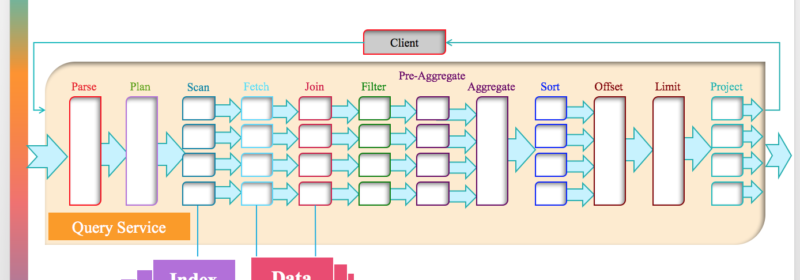
Approaches to Query Optimization in NoSQL
The NoSQL and query optimization tool evaluates the possibilities and selects the efficient plan. Find out what to do when you don’t have a good optimizer.

Search & Rescue: 7 Reasons N1QL Developers Use Search
Couchbase N1QL/SQL can call full-text search queries, providing powerful benefits described here including fuzzy and natural language matching.

Searching JSON: compare text search in Couchbase and MongoDB.
Learn more about the text search features for an effective, compare and contrast those available features in MongoDB and Couchbase with examples.

N1QL & SEARCH: Leverage Full-Text Search (FTS) Index in N1QL
With Couchbase 6.5 Full Text Search is now available through N1QL queries - the single API combines N1QL exact predicate and powerful FTS matching.

Full-Text Search Indexing Best Practices & Tips – Part 1
Learn about best practices of Full-Text Search (FTS) indexing options and tuning to build the right index for the job at hand.

Announcing Couchbase Server 6.0 with Analytics
Couchbase Analytics Service is now available! Check out its key capabilities and see how analytics make a difference in Couchbase Server.

What Is Fuzzy Matching and How to Use It Correctly
What is fuzzy matching? Learn different string-searching algorithms you can use and examples of how to overcome major side effect without losing relevance.

Building a Shazam-like app to understand how Tokenizers and Filters work | FTS Part 2
This post focuses on the Inverted Index and also explore how analyzers, tokenizers, and filters might shape the result of your searches.

Why you should avoid LIKE % | Deep Dive on FTS – Part 1
This article focuses on why one should avoid using LIKE % for search and also check out why FTS is so much better than “Like %.
Top Posts
- Data Modeling Explained: Conceptual, Physical, Logical
- What are Embedding Models? An Overview
- Data Analysis Methods: Qualitative vs. Quantitative Techniques
- Application Development Life Cycle (Phases and Management Models)
- What Is Data Analysis? Types, Methods, and Tools for Research
- Build a Celebrity Look-Alike App With Multimodal Vector Search an...
- A Story of How Multimodel Databases Can Reduce Data Sprawl (Told...
- A Breakdown of Graph RAG vs. Vector RAG
- Reduce TCO By 10x Using Couchbase 7.1 For Large Multi-Terabyte Da...


