
Category: Best Practices and Tutorials
-

NoSQL Database Evaluation: A Hands-On Guide
Evaluating a NoSQL database isn’t about checking off a list of features. Instead, you should be asking yourself how each database will hold up under your real-world access patterns, scale requirements, and operational constraints…
-
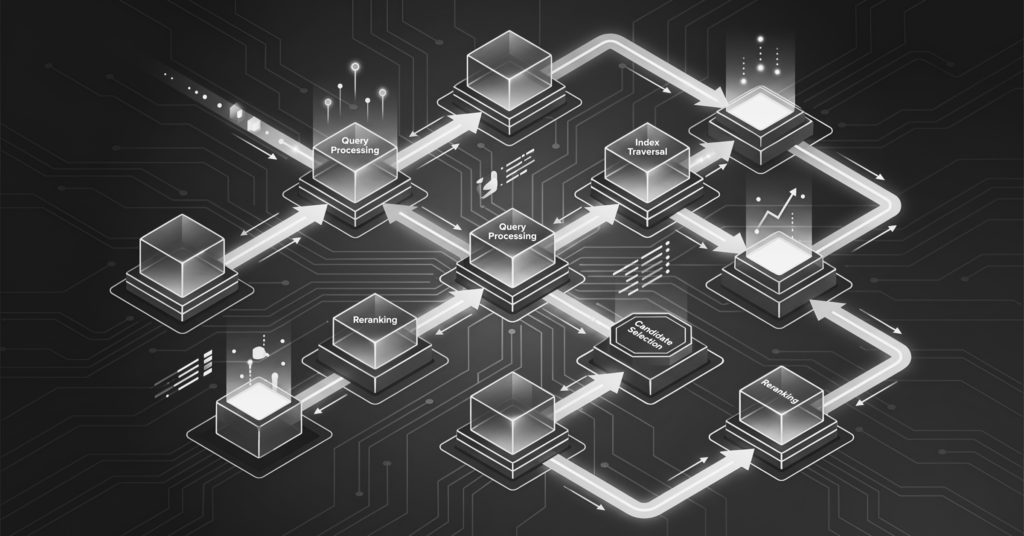
Vector Database Architecture: What Tech Buyers Should Evaluate
A vector database’s architecture has four layers: embeddings, indexing, retrieval, and storage. How those layers are designed and how well they integrate with your existing data infrastructure determines whether your AI search, semantic search,…
-

Data Analysis Methods: Qualitative vs. Quantitative
Data analysis methods determine how teams extract meaning from raw data such as user behavior logs, application telemetry, and customer feedback. Two common approaches to analyzing data are qualitative and quantitative analysis. Each method…
-

App Development Cost: A Complete Pricing Guide and Breakdown
SUMMARY Determining app development costs is a critical early step in your development process, given that some apps cost as little as $5,000 to develop, while others cost over $1 million. Key elements such…
-
The Difference Between Data Integration vs. Application Integration
What is data integration? Data integration is the process of combining data from various sources into a single, unified view. It focuses on the movement and transformation of data itself. The primary goal is…
-

Data Consistency vs. Data Integrity: Differences and Similarities
The terms “data consistency” and “data integrity” are often used interchangeably, but they represent distinct concepts in database management. Understanding the difference is key for anyone working with data, from developers to database administrators.…
-

A Complete Guide to the AI App Development Process
AI app development involves building intelligent systems that can learn, adapt, and make decisions based on data rather than relying solely on fixed rules. These applications power personalization engines, predictive analytics, natural language processing…
-

Event-Driven Data Migration & Transformation using Couchbase Eventing Service
Modern data migrations rarely involve a simple lift-and-shift; they require transformation, cleansing, and enrichment so applications can immediately leverage the destination platform’s strengths. Couchbase Capella’s Eventing service enables event-driven, inline transformations as data arrives,…
-

An Overview of Unstructured Data Analysis
Unstructured data analysis focuses on uncovering insights from data that doesn’t follow a fixed format, such as text, images, and audio. Unlike structured data, which is neatly organized and easy to query, unstructured data…
-

Building an AI Agent with Couchbase MCP and cagent
The AI landscape is rapidly transitioning from simple chatbots to AI agents that can plan, reason, and execute tasks autonomously. At the forefront is Docker cagent – a powerful, easy-to-use, multi-agent runtime that’s democratizing…
-

How to Calculate TCO for NoSQL Databases
What is total cost of ownership (TCO)? Total cost of ownership is a financial estimate that includes all direct and indirect costs associated with deploying and operating a software solution throughout its lifecycle. It…
-

How to Clone Couchbase Clusters for CI/CD On-Demand Ephemeral Environments
Continuous Integration and Continuous Deployment are now common software development practices. In the world of databases, this translates into needing on-demand, stateful, ephemeral environments. Provisioning a stateless environment is not tied to any particular…
