
Em qualquer banco de dados distribuído, gerenciar dados de índice entre servidores é um desafio fundamental. É como mudar para uma nova casa com centenas de itens para encaixotar. Você precisa encontrar o equilíbrio perfeito: colocar itens demais (índices) em uma única caixa (shard) a torna pesada, difícil de mover e gera o risco de um impacto generalizado caso seja danificada. Criar caixas pequenas demais faz com que o trabalho de rastreá-las e gerenciá-las sufoque você em complexidade.
O Couchbase resolve esse complexo problema de organização de índices com o Comerciante de Fragmentos, um sistema inteligente projetado para empacotar e organizar automaticamente dados de índice em seu cluster distribuído para máxima eficiência e flexibilidade.
A Fundação da Escala: O Problema de Cachinhos Dourados do Gerenciamento de Índices
Um índice de banco de dados é o motor de consultas rápidas – é o que permite que o sistema vá diretamente para os dados de que você precisa, como o índice no final de um livro. No Couchbase, estilhaços agrupar índices relacionados, permitindo que o sistema gerencie dezenas de unidades lógicas em vez de milhares de índices individuais. Quando você dimensiona ou realiza manutenção, você move fragmentos inteiros em vez de índices individuais.
O maior desafio operacional é determinar o número certo de fragmentos – o “problema de Cachinhos Dourados”:
- Poucos fragmentos significa trabalho pesado e rebalanceamento lento de cluster, e problemas de desempenho em um shard afetam todos os índices dentro dele.
- Muitos fragmentos aumenta a sobrecarga de memória, pois cada fragmento exige seus próprios buffers de memória, e rastrear milhares de pequenos fragmentos é difícil.
O Negociante de Fragmentos encontra dinamicamente o ponto ideal com base no tamanho do seu cluster:
- Pequenos aglomerados (256MB–1GB de memória) funcionam de forma ideal com 10–40 fragmentos.
- Grandes aglomerados (mais de 16 GB de memória) pode gerenciar eficientemente de 600 a 2.000 shards.
Garantindo a Resiliência do Desempenho para o Futuro: Isolamento Automático de Cargas de Trabalho
Nem todos os índices são criados iguais, especialmente com o crescimento das cargas de trabalho de IA. O Shard Dealer foi desenvolvido para essa realidade moderna, garantindo que seus tipos de índice nunca sejam misturados:
- Índices tradicionais: Otimizado para operações padrão, como correspondências exatas e consultas de intervalo (“encontrar todos os usuários chamados John”).
- Índices vetoriais: Projetado para cargas de trabalho exigentes de IA e aprendizado de máquina, permitindo recursos como busca por similaridade (“encontrar produtos semelhantes a esta imagem”). Eles consomem muitos recursos de CPU e se beneficiam de hardware especializado.
Essa separação é crucial para a otimização moderna de recursos:
- Otimize recursos: Direcione índices vetoriais que consomem muitos recursos para fragmentos especializados.
- Evite gargalos: Ajuste as configurações de memória e desempenho para um tipo de carga de trabalho específico sem impactar outras consultas padrão.
Esta organização inteligente é impulsionada pela lógica central do Negociador de Estilhaços, que usa um algoritmo de passagens múltiplas para gerenciar o posicionamento visando a máxima eficiência.
A Inteligência Interior: Algoritmo de Múltiplas Passagens para Escalabilidade Previsível
O Negociante de Fragmentos usa um sofisticado algoritmo de passagens múltiplas para decidir onde cada novo índice deve ser colocado, gerenciando continuamente a alocação de índices para obter a máxima utilização sem sobrecarregar os servidores. Pense nisso como uma árvore de decisão com opções de contingência crescentes:
- Estabelecendo flexibilidade: Primeiro, garante que cada nó construa uma base mínima de pelo menos seis fragmentos para garantir flexibilidade durante o rebalanceamento. Isso evita ter apenas duas “caixas” onde sua única opção é “mover tudo”.”
- Otimizando a capacidade: Uma vez criada a infraestrutura, ela prioriza a reutilização dos shards existentes que estejam com menos de 50% de ocupação e com carga mais equilibrada, evitando situações em que um shard seja dominado por alguns poucos índices enormes.
- Evitando sobrecarga: Um novo fragmento é criado apenas quando nenhum fragmento existente tem espaço confortável disponível, garantindo que os fragmentos existentes não se tornem gargalos de desempenho.
- Plano de contingência de emergência: Em casos raros, como durante atualizações de versões mais antigas ou quando um nó atinge seu limite confortável, o sistema garante que a criação de índices nunca falhe, encontrando qualquer fragmento abaixo do limite de capacidade rígida ou criando um fragmento de estouro temporário, se necessário.
Arquitetura para Escalabilidade Resiliente
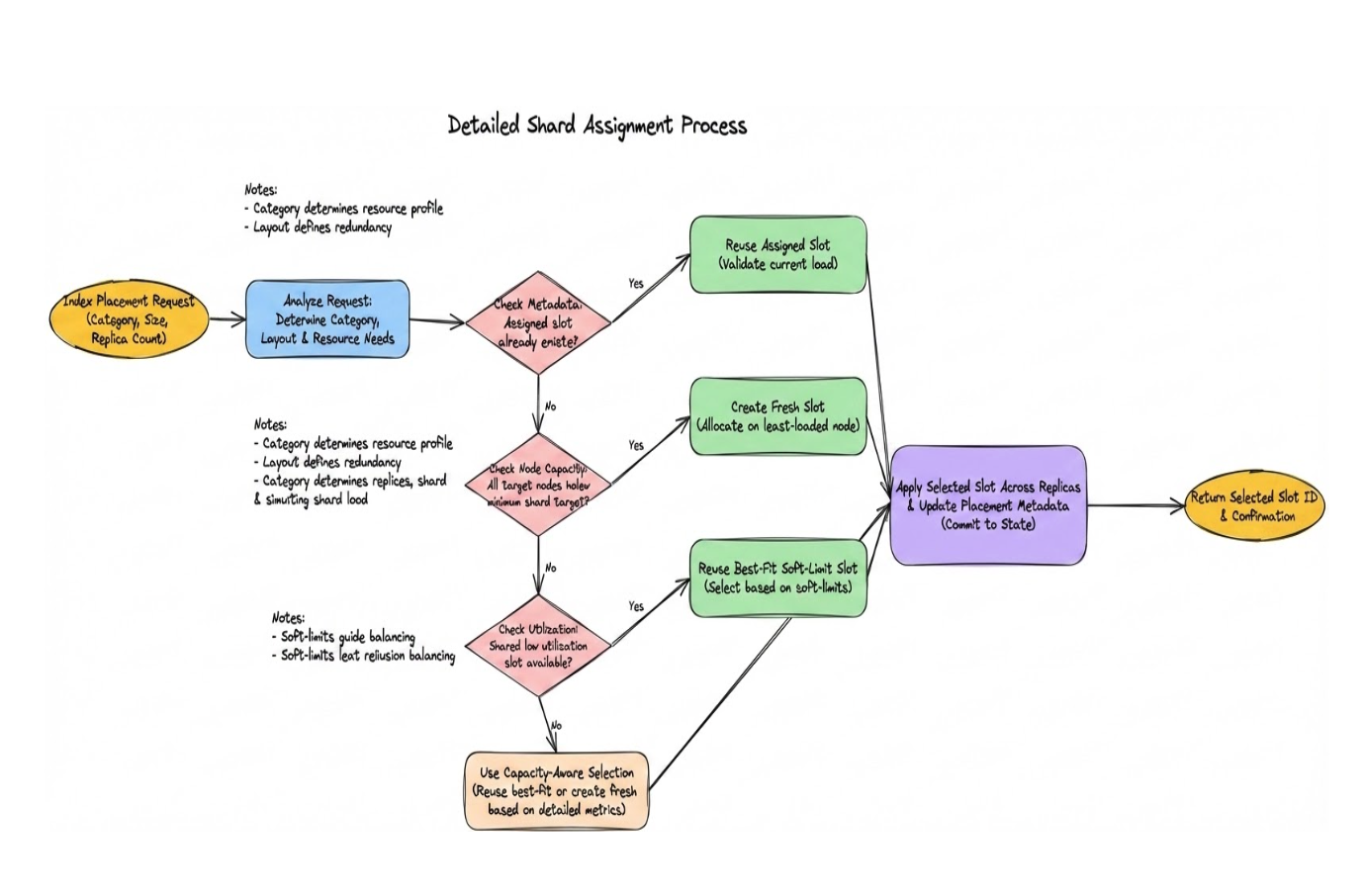
A resiliência do banco de dados depende de réplicas – cópias de dados em servidores diferentes. O Shard Dealer continua a garantir réplicas de índice e réplicas de fragmentos estão perfeitamente alinhadas. Esse alinhamento significa que, durante uma alternância de failover de servidor, grupos de índices inteiros e consistentes no fragmento podem ser ativados juntos, simplificando e acelerando drasticamente o failover e a recuperação.
O Impacto nos Negócios: Principais Benefícios do Shard Dealer
Ao automatizar a complexidade do gerenciamento de índices, o Shard Dealer oferece benefícios mensuráveis:
- Escalonamento sem esforço: Ao dimensionar seu cluster, o sistema move menos fragmentos bem organizados em vez de milhares de índices individuais, acelerando significativamente o processo de rebalanceamento.
- Desempenho garantido: Ao impor limites rígidos de tamanho aos *shards*, o sistema impede que qualquer *shard* individual monopolize memória ou CPU, resultando em um desempenho previsível.
- Clareza operacional: Em vez de monitorar milhares de índices individuais, os operadores podem gerenciar e solucionar problemas em termos de dezenas de fragmentos, tornando o gerenciamento mais administrável.
- Prevenção de obsolescência: O Shard Dealer oferece uma arquitetura à prova de futuro que suporta modelos de dados em evolução – desde consultas tradicionais até busca vetorial alimentada por IA – sem exigir intervenção manual ou prendê-lo a decisões atuais.
Esta postagem explica o recurso Shard Dealer em Couchbase Server 8.0+ introduzido para aprimorar indexação vetorial rebalanceia.

Deixe um comentário
Você precisa fazer o login para publicar um comentário.