
반복적인 업무를 처리하고, 아이디어 구상을 돕고, 심지어 질문에 답변까지 해주는 디지털 도우미가 있었으면 하고 바란 적이 있으신가요? AI 에이전트를 소개합니다. 이 영리하고 목표 지향적인 프로그램들은 콘텐츠 생성을 비롯한 모든 것을 처리하며 우리와 함께 일하도록 설계되었습니다. 고객 서비스 문의 관리. 단순히 명령을 따르기만 하는 전통적인 소프트웨어와 달리, AI 에이전트는 주변 환경을 “감지’하고, 옵션을 ”고민’하며, 목표에 기반하여 “행동’할 수 있습니다. AI 에이전트는 스스로 작동하고 상황에 적응하면서 보조자, 창작자, 심지어 조언자 역할까지 할 수 있습니다.
이 블로그 포스트는 AI 에이전트의 세계, 특히 다음 분야에서 사용되는 에이전트를 깊이 있게 다룹니다. 생성형 AI. 에이전트의 작동 원리부터 실제 시나리오에서 구축하고, 학습시키고, 사용하는 방법에 이르기까지 모든 것을 다룰 것입니다.
우리는 또한 다양한 유형의 에이전트, 챗봇과 같은 친숙한 도구들과의 비교, 그리고 “합리적” 또는 “멀티 에이전트” 시스템이 의미하는 바를 탐구할 것입니다. 마침내 여러분은 AI 에이전트, 생성형 AI와의 적합성, 그리고 비즈니스 프로세스부터 창의적인 프로젝트에 이르기까지 모든 것을 향상시키는 방법에 대해 확실히 이해하게 될 것입니다. 자, 그럼 이 에이전트들을 그토록 강력한 디지털 팀 동료로 만드는 요인이 무엇인지 본격적으로 알아봅시다!
AI 에이전트란 무엇인가요?
생각해 보라. 명령어만 따르는 것이 아니라 전체적인 맥락을 “이해'하고 다음에 무엇을 해야 할지 아는 유용한 비서가 있다면 말이다. 그 비서는 사람이 아니라 일종의 소프트웨어다. 이것이 바로 생성형 AI의 에이전트가 지향하는 바이다. 즉, 새로운 정보를 받아들이고 적응하며 독자적으로 업무를 수행할 수 있는 자립적인 디지털 팀원이다. 상황에 따라 기능을 유연하게 바꿀 수 있는 디지털 버전의 스위스 아미 나이프라고 생각하면 된다. 생성형 AI에서 에이전트는 단순히 사전에 정의된 지침에 따라 행동하는 것이 아니기 때문에 단순한 프로그램을 넘어선 존재들이다. 에이전트는 자신의 환경을 관찰하고, 자신이 ”보는“ 것을 처리하며, 부여받은 목표에 바탕을 두고 행동을 취한다.
톤과 스타일에 대한 이해를 바탕으로 이메일 초안을 작성해 주는 AI 글쓰기 도구를 사용하고 있다고 가정해 보겠습니다. 이 글쓰기 도구는 단순히 템플릿을 앵무새처럼 따라 하는 것이 아니라 사용자의 선호도에 맞춰 초안을 작성하고, 수정하고, 적응하기 때문에 일종의 AI 에이전트 역할을 합니다. 생성형 AI 에이전트는 자율성 측면에서 더욱 발전할 수 있습니다.
예를 들어, 콘텐츠 제작 에이전트는 단순히 텍스트를 생성하는 대신 트렌딩 토픽을 검색하고, 무엇이 관련성이 있는지 분석하고, 블로그 글을 초안 작성한 다음, 브랜드의 어조를 잘 이해하는 실제 어시스턴트처럼 몇 가지 눈길끄는 헤드라인을 제안할 수 있습니다. 이러한 에이전트는 맹목적으로 코드를 실행하는 것이 아니라, 가진 데이터를 바탕으로 “생각'하고 ”결정'할 수 있게 해주는 프레임워크 내에서 작동합니다.
또 다른 시나리오는 팀의 진행 상황을 추적하고, 병목 현상을 파악하며, 최적의 워크플로를 제안하는 프로젝트 관리 에이전트를 포함할 수 있습니다. 이러한 에이전트는 단순한 프로젝트 상태 업데이트 표시에 그치지 않고, 일정을 분석하고, 작업을 조정하며, 마감일을 맞출 수 있도록 도구이나 리소스를 추천하기까지 할 것입니다.
이러한 생성형 AI 에이전트는 단순히 행동하는 것에 그치지 않고, 가용한 데이터를 바탕으로 “생각'하고 ”결정'할 수 있게 해주는 프레임워크 내에서 작동하며 관찰하고 적응합니다.
AI 에이전트의 이점
AI 에이전트의 잠재적 유용성은 조직이 더 스마트하고 효율적으로 운영될 수 있도록 지원하여 혁신적일 수 있습니다. 반복적인 작업을 자동화함으로써, 에이전트는 인적 자원이 창의성과 비판적 사고가 필요한 전략적 업무에 집중할 수 있도록 여유를 줍니다.
게다가, 이들의 확장성은 추가적인 인력 없이도 대량의 요청을 처리할 수 있도록 보장하여, 비용 효율적이고 신뢰할 수 있게 만듭니다. 개인화 이것은 우리가 모든 AI 관련 애플리케이션 상호작용에서 볼 수 있는 또 다른 핵심 장점입니다. AI 에이전트는 사용자 행동을 바탕으로 상호작용과 추천을 맞춤화하고 독창적이며 관련성 높은 경험을 제공함으로써 이를 더욱 심화시킵니다.
어쩌면 가장 중요하게도, 이들의 연중무휴 24시간 가동은 24시간 지원을 보장하여 고객 경험과 유지율을 향상시킵니다. 이러한 기능들이 결합되어 기업과 개인이 더 적은 노력으로 더 많은 것을 달성할 수 있도록 역량을 강화해 줍니다.
AI 에이전트의 종류에는 어떤 것들이 있나요?
AI 에이전트에는 여러 유형이 있으며, 각각 고유한 기능을 가지고 있습니다.
- 간단한, 반응형 에이전트 환경적 자극에 학습 능력 없이 직접 반응합니다. 키워드를 바탕으로 단순한 질문에 답하는 기본적인 인공지능을 생각해보세요.
- 대조적으로, 모델 기반 에이전트 더 많은 “인식”을 갖고 있으며, 저장된 지식을 사용하여 새로운 정보를 해석합니다.
- 그다음에는 학습 에이전트, 이전 상호작용을 바탕으로 응답을 조정할 수 있습니다. 학습 에이전트는 고객 서비스나 추천 엔진처럼 응답이나 행동의 지속적인 개선이 필요한 응용 프로그램에 이상적입니다.
- 고급 에이전트(예: 목표 기반 그리고 효용 기반 에이전트, 목표나 계산된 결과에 따라 결정을 내립니다. 이러한 에이전트는 생성형 AI에서 흔히 볼 수 있으며, 원하는 최종 목표에 따라 콘텐츠를 생성하거나 수정합니다. 예를 들어, 효용 기반 에이전트는 과거 참여 데이터를 분석하여 가장 참여도가 높은 소셜 미디어 콘텐츠를 만드는 것을 우선시할 수 있습니다.
각 유형은 서로 다른 요구를 충족하지만, 종합적으로는 AI가 단순한 작업과 복잡한 작업 모두를 지원할 수 있도록 합니다.
AI 에이전트 예시 및 유스케이스
다양한 유형의 인공지능(AI) 에이전트를 살펴보았으니, 이제 그들이 실제 시나리오에서 달성할 수 있는 것들을 더 자세히 살펴보겠습니다. 일반적인 분류를 넘어, AI 에이전트가 작동하는 방식에 대한 구체적인 예시들을 상상해 보는 것은 유익합니다. 이것들은 단순한 이론적 유스케이스가 아니라, 에이전트가 협업 도구 및 문제 해결사로서 기능하는 방식을 보여주는 현실적인 예시들입니다. 다음은 그중 몇 가지에 불과하며, 미래에는 훨씬 더 많은 예시들이 생겨날 것입니다.
건강 모니터링 동반자
생각해 보세요 디지털 헬스 웨어러블 기기를 통해 사용자의 건강 상태를 모니터링하며 항상 곁을 지켜주는 동반자입니다. 심박수, 수면 질, 활동량을 추적하고 건강 개선을 위한 맞춤형 팁을 제공합니다. 약 복용 알림이나 우려되는 건강 추세에 대한 경고가 필요하신가요? 이 에이전트는 실시간 통찰력과 장기적인 제안을 제공하여 더 건강한 삶을 살 수 있도록 도와줍니다.
여행 플래너 및 어시스턴트
AI와 함께라면 여행 계획 세기가 그 어느 때보다 쉬워졌습니다. 여행 항공권과 호텔 예약을 넘어, 맞춤형 일정을 짜고, 액티비티를 추천하며, 계획이 변경되거나 날씨로 인해 일정이 틀어질 경우 실시간으로 조정까지 해주는 비서입니다. 사용자의 여행 습관을 파악하여 여행이 원활하고 효율적이며 개인 취향에 맞게 진행되도록 보장합니다.
학습 및 개발 코치
개인 과외 선생님과 커리어 코치가 하나로 합쳐진 것과 같은 AI 에이전트를 상상해 보세요. 이 에이전트는 여러분의 지식 공백을 파악하고, 관련 자료를 추천하며, 학습하면서 진도를 추적해 줍니다. 새로운 언어를 마스터하든 자격증을 준비하든, 이 에이전트는 여러분의 속도에 맞춰 적응하여 기술을 기르고 목표를 달성할 수 있도록 도와줍니다.
가정용 에너지 최적화기
AI 에이전트가 조용히 당신의 집을 관리하는 모습을 상상해 보세요. 에너지 사용량. 사용자의 습관을 학습하여 온도조절기, 조명, 가전제품 등의 기기를 제어함으로써 에너지 소비와 비용을 최소화합니다. 시간이 지남에 따라 사용 패턴을 분석하고 개선 사항을 제안하여 더욱 효율적이고 친환경적인 가정을 만들어 줍니다.
AI 에이전트는 어떻게 작동하나요?
AI agents operate through a continuous loop of sensing, reasoning, and acting. They start by collecting information from their environment—user inputs, external databases, or real-time data streams. With this data, the agent processes the information, assessing it against its objectives and programmed logic. If it’s a generative agent, it may use this data to create something new, like drafting an answer to a question, generating a creative image, or making a recommendation. If it’s a backend data service agent, it may collect and process relevant information and store it in a database for further use by an end-user application.
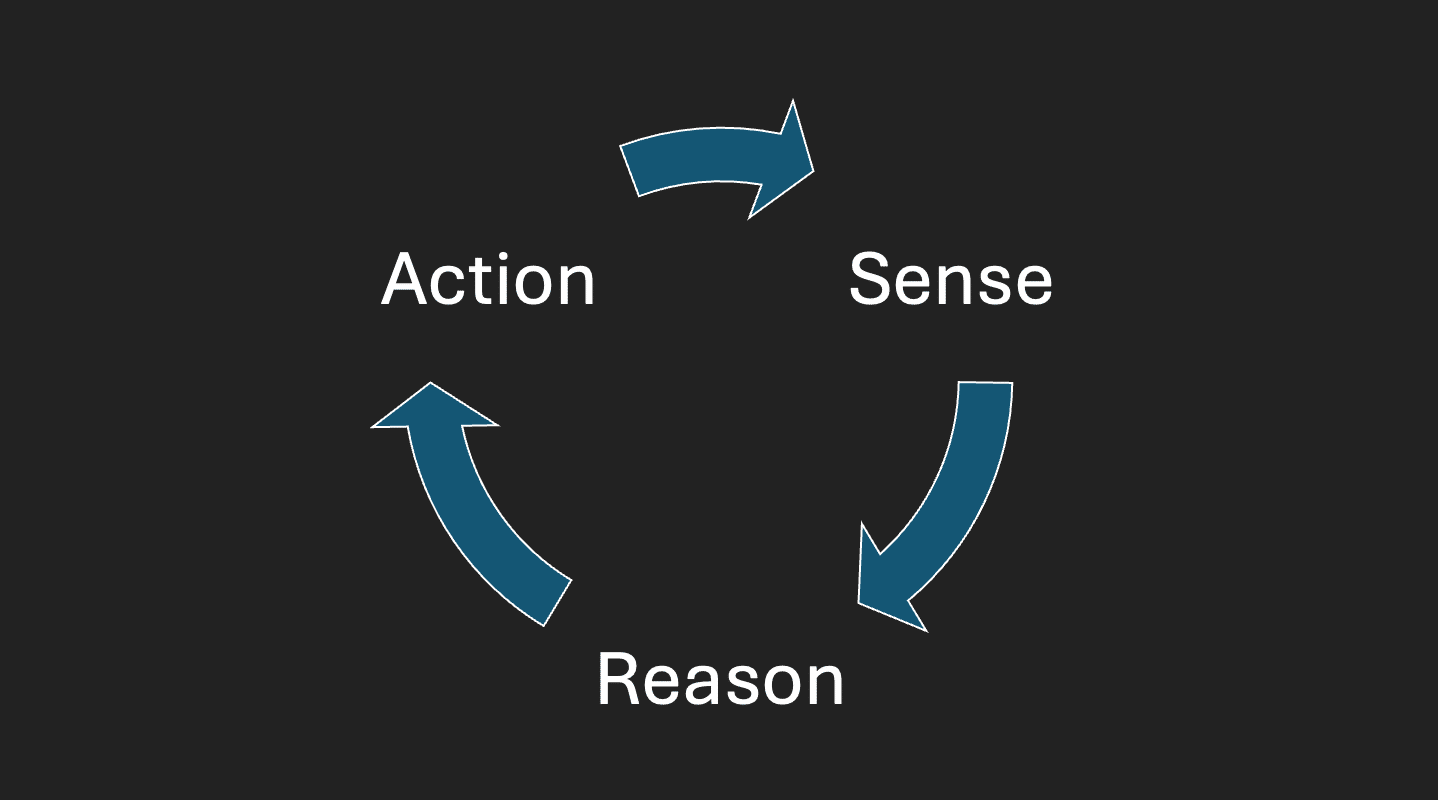
In this process, AI agents often rely on algorithms or models to interpret data and decide on their actions. Some agents are designed to refine their decisions based on continuous feedback. For instance, a customer support agent might adjust its responses based on user feedback or adapt to handle new types of queries. This ability to sense and adapt, rather than merely execute instructions, distinguishes an AI agent from more traditional forms of automation. Let’s dive deeper into the architecture of these kinds of agents.
AI agent architecture
AI agent architecture is a structured design that enables agents to function intelligently, adapt to new situations, and achieve their goals with minimal human input. It consists of several interconnected components, each playing a distinct role.
Perception layer
The perception layer is responsible for gathering and interpreting information from the environment. This could involve processing text, images, audio, or other data streams. It acts as the agent’s senses, allowing it to observe and understand the context in which it operates.
Decision-making layer
Once data is collected, the decision-making layer determines the agent’s next steps. This layer uses algorithms, rules, or learned behaviors to process the information and decide on the best course of action. It’s essentially the agent’s brain where reasoning occurs.
Action layer
The action layer translates decisions into tasks. Whether generating text, recommending products, or triggering workflows, this layer executes the tasks required to achieve the agent’s objectives.
Learning layer
The learning layer ensures continuous improvement. By analyzing outcomes, identifying patterns, and refining models or strategies, this layer allows the agent to become smarter and more effective over time.
Together, these components form a modular architecture that makes AI agents adaptable, scalable, and capable of handling complex applications across industries.
주요 내용
AI agents represent a transformative leap in approaching automation and problem-solving, offering adaptability, efficiency, and creativity across diverse applications. While their potential is vast, building, training, and deploying these agents requires careful planning, robust data, and a clear understanding of their limitations. By harnessing their strengths and addressing their challenges, AI agents can be powerful tools to enhance productivity, streamline workflows, and drive innovation.
Next steps and additional resources
- Explore more: Dive deeper into AI agent development with tutorials on creating and training models using popular frameworks like TensorFlow 또는 PyTorch.
- Stay updated: Follow AI research blogs, 회의들, 그리고 communities to learn about the latest breakthroughs in agent architecture and generative capabilities.
- Hands-on practice: Experiment with open-source tools like 랑체인 or create a simple chatbot with frameworks like Rasa.
- Plan your next project: Identify a task or problem in your work or personal projects that could benefit from an AI agent, and start mapping out its functionality and goals.
By combining theoretical knowledge with practical experimentation, you can unlock the full potential of AI agents in your field.
FAQ
- How do you build an AI agent? Building an AI agent involves defining its goals, designing its architecture to enable decision-making and learning, training it with data, and rigorously testing it for real-world tasks.
- How do you train an AI agent? Training an AI agent requires exposing it to relevant data, running simulations to teach patterns and responses, and refining its behavior with iterative feedback and testing.
- What can AI agents do? AI agents can perform diverse tasks, from data sorting and recommendation to creative content generation, medical diagnoses, and automating repetitive processes.
- What is a rational agent in AI? A rational agent in AI is programmed to make decisions that maximize effectiveness, acting based on knowledge, environment, and specific objectives to achieve the best possible outcome.
- What is agentic workflow in AI? Agentic workflow in AI involves processes where AI agents operate autonomously or collaboratively, handling tasks with minimal human intervention, which can streamline complex workflows and enhance productivity.
- What is the difference between an agent and a chatbot? An agent is built to handle complex, adaptive tasks and can act with greater independence, while a chatbot generally follows a set of pre-defined responses for conversational interactions, with limited ability to adapt beyond its script.
- Is ChatGPT an AI agent? Yes, ChatGPT can be considered an AI agent, as it generates responses independently, using context from user interactions to adapt its answers. However, it lacks the ability to take action outside of text-based responses.

댓글 남기기
댓글을 달기 위해서는 로그인해야합니다.